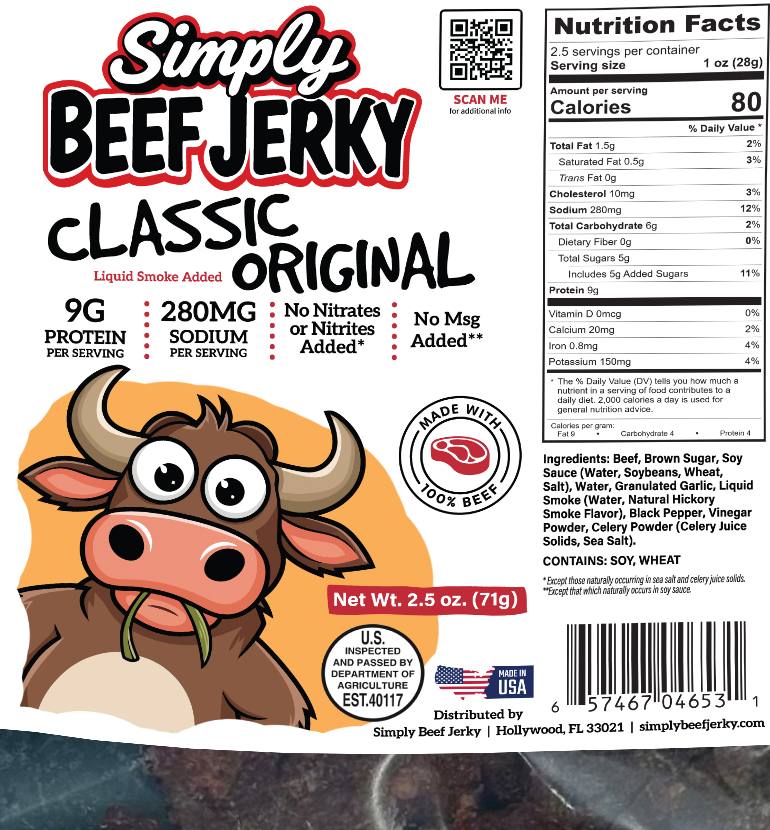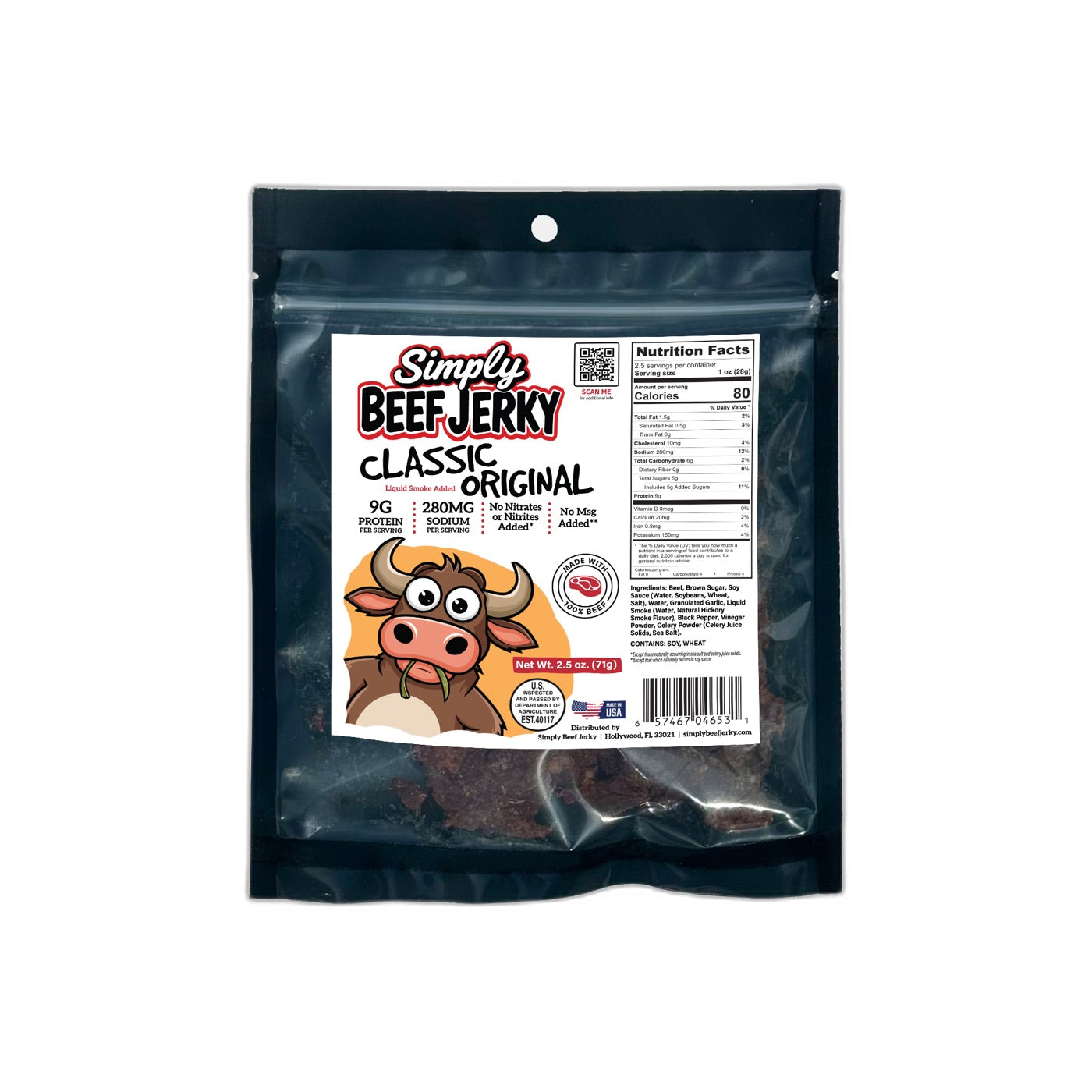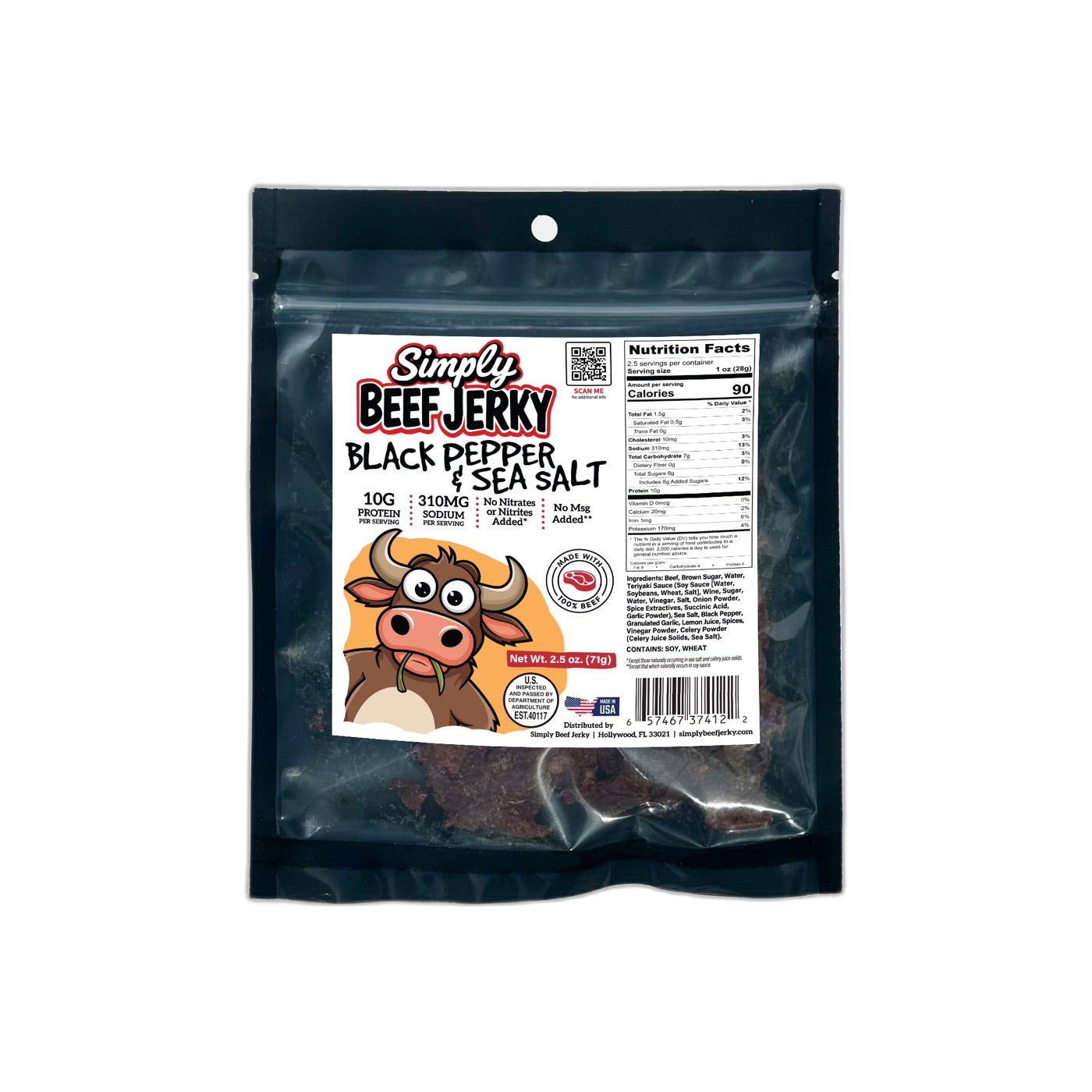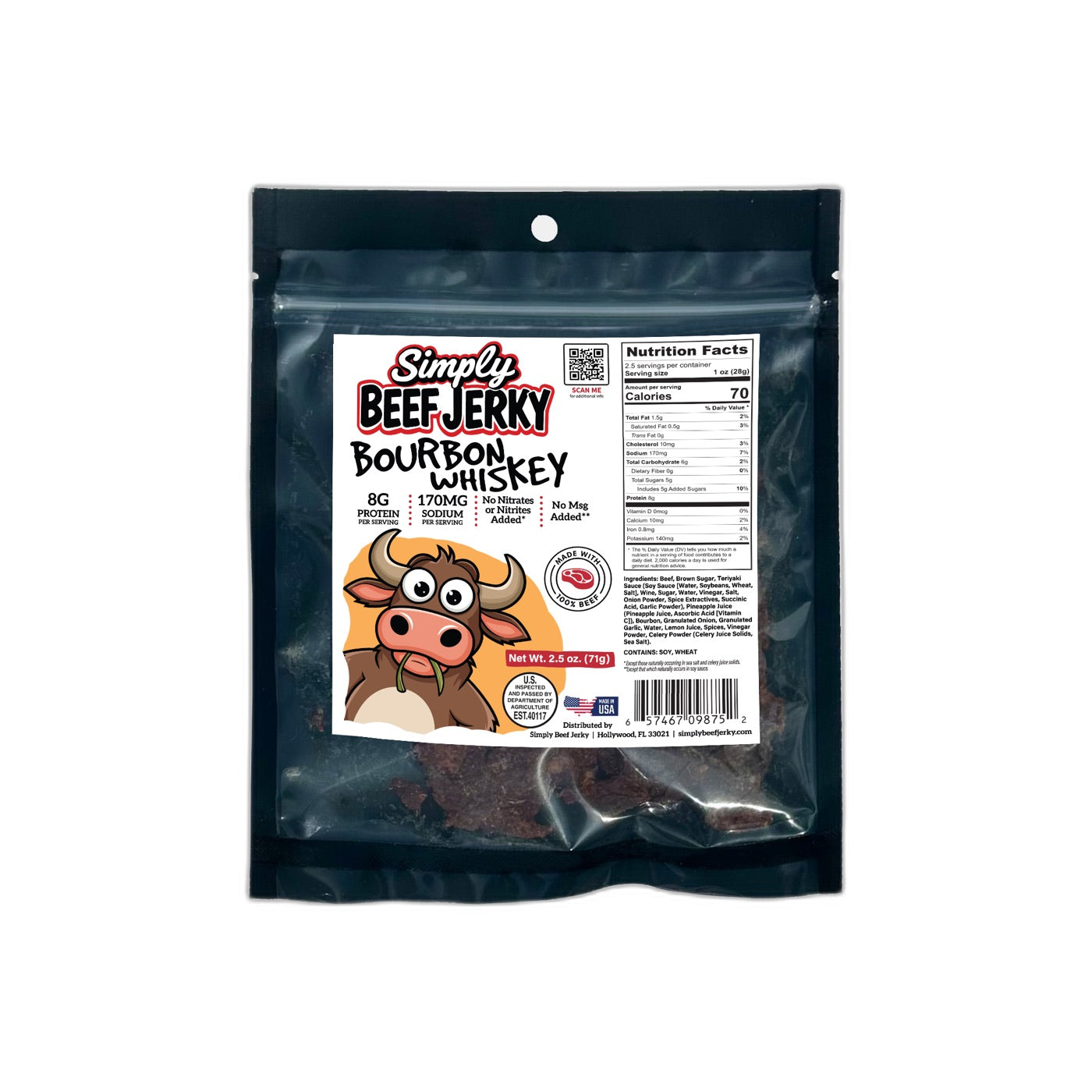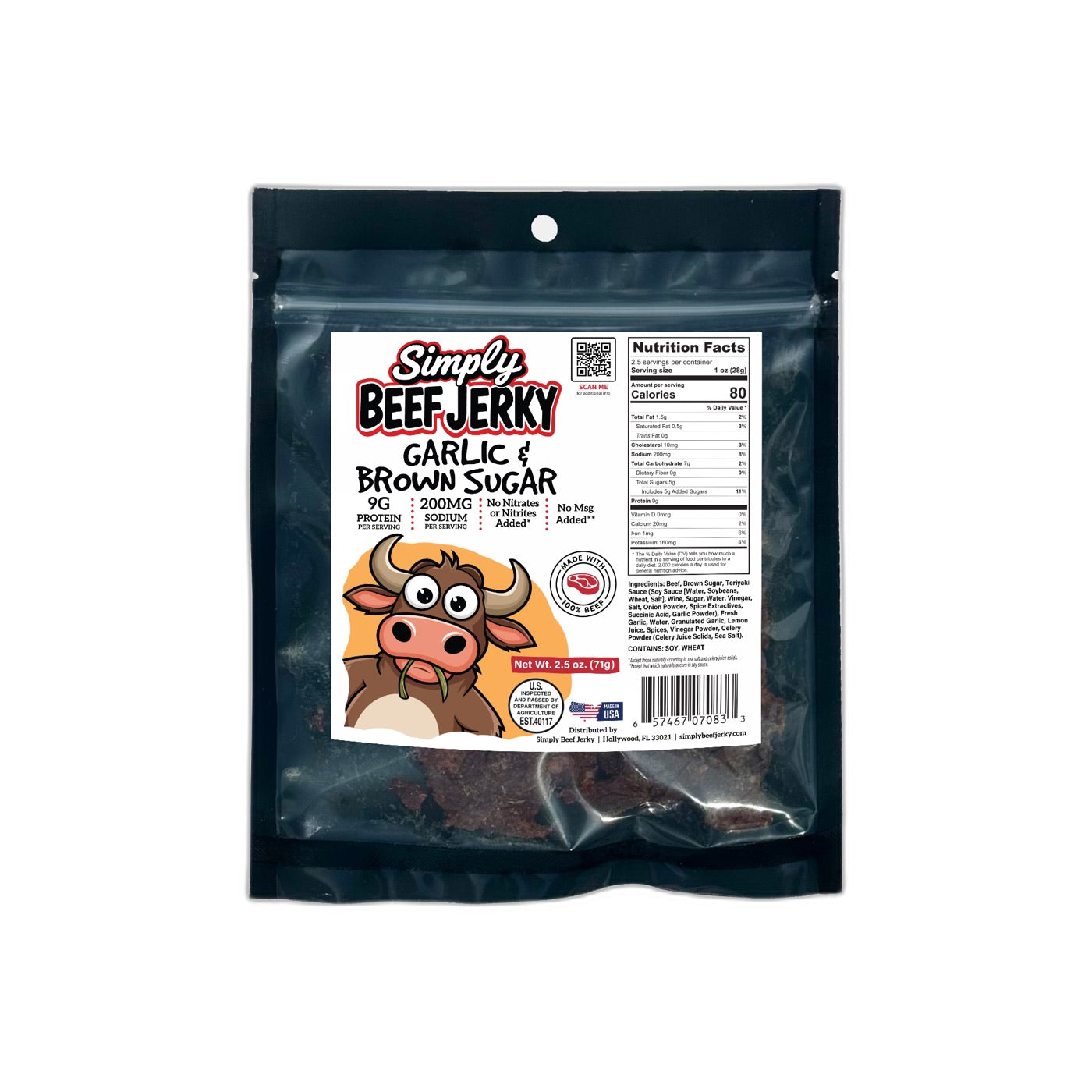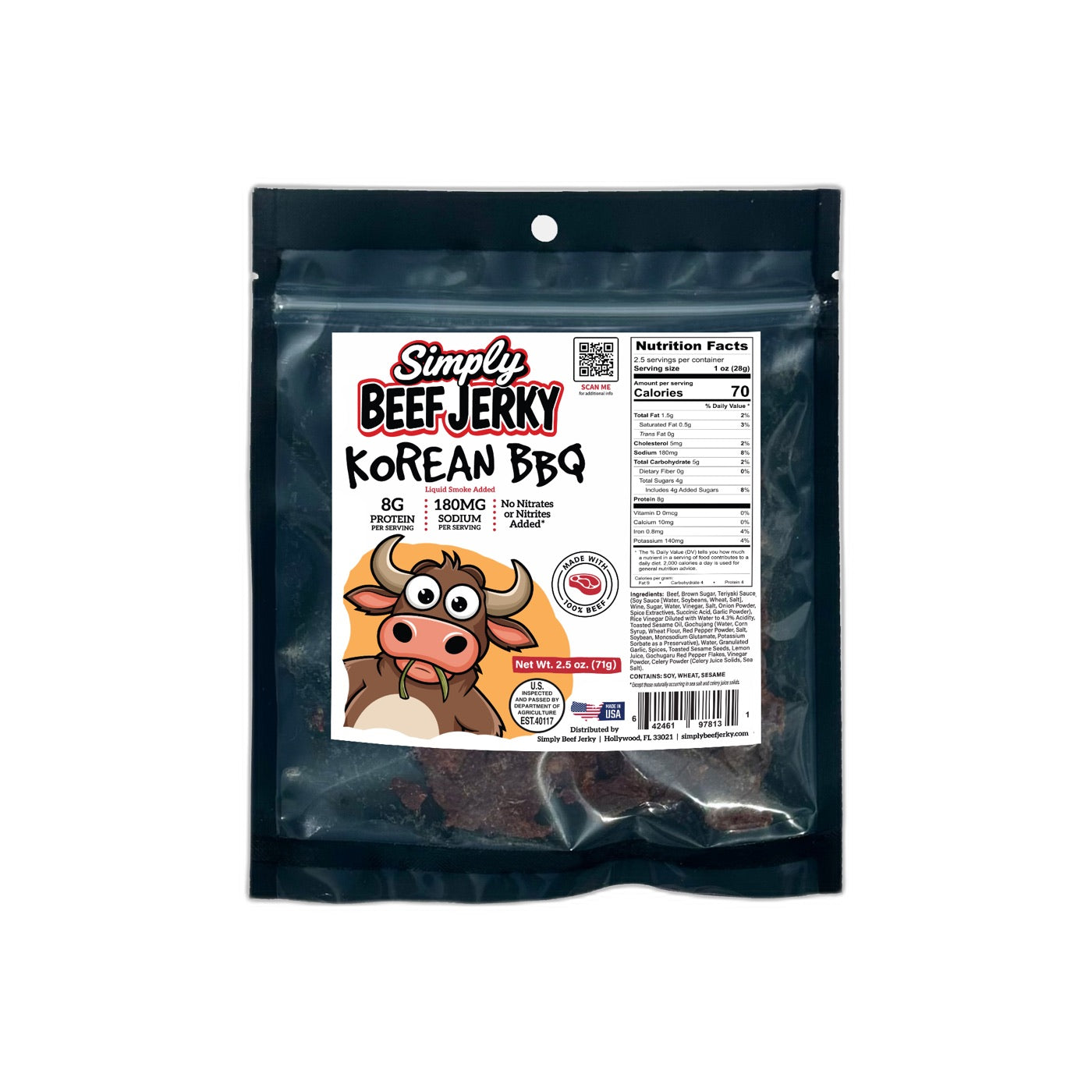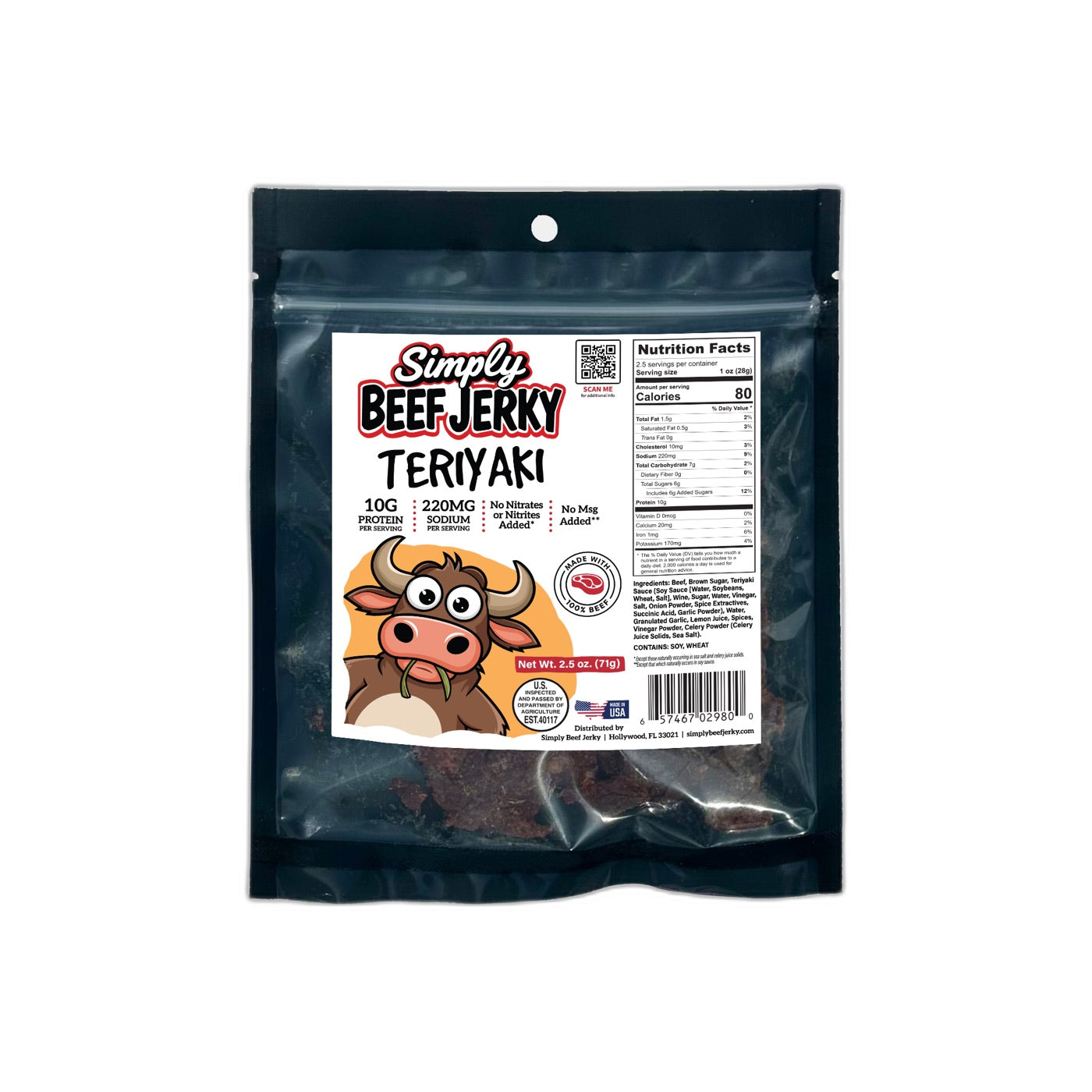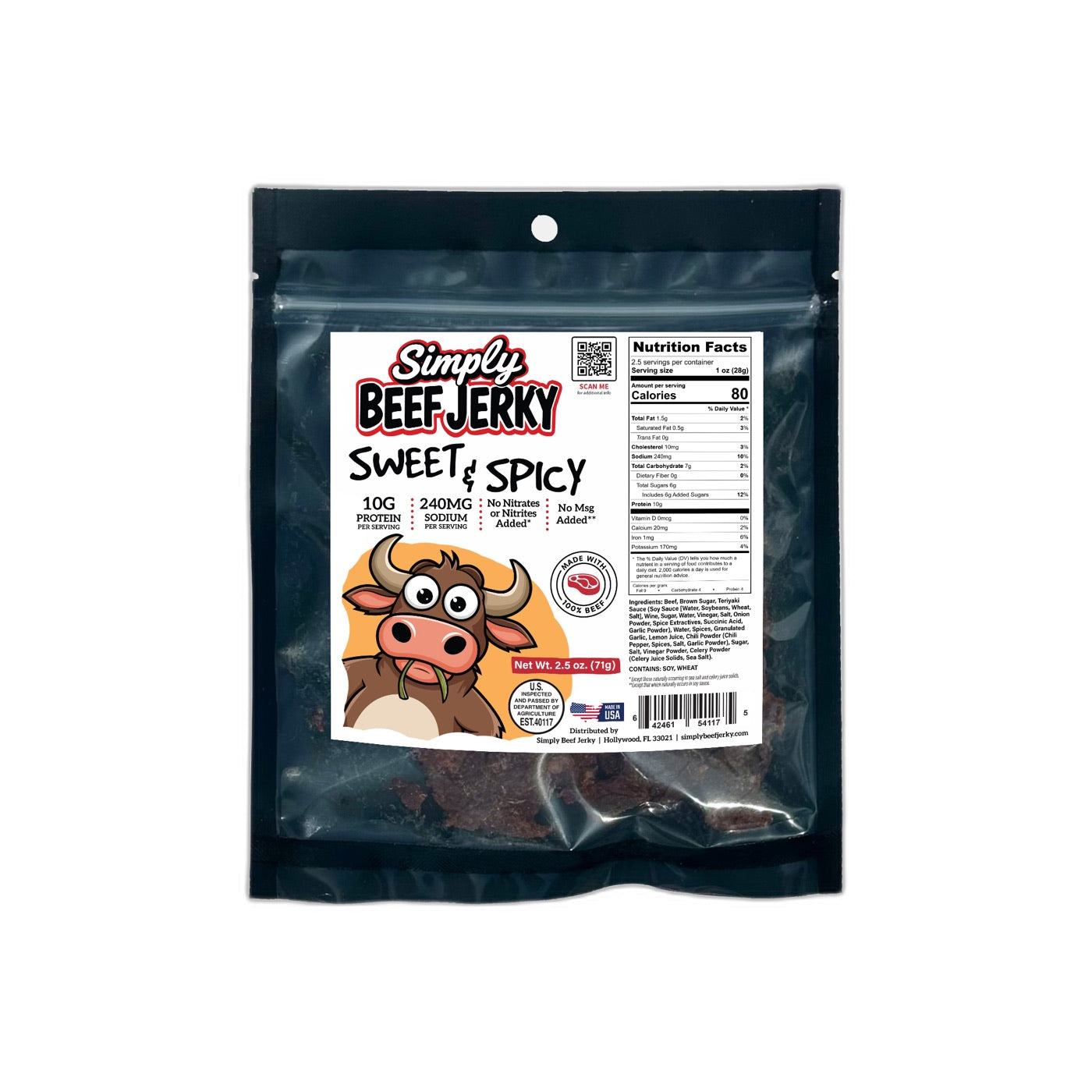
Reading a beef jerky label correctly takes about 30 seconds once you know what to look for. Most people do not look, which is exactly how the jerky industry sells a lot of low-quality product at premium prices. Here are the six things that actually matter on any beef jerky label.
1. First Ingredient Should Be Beef
The ingredient list is organized by weight, with the most prevalent ingredient listed first. On quality beef jerky, the first and dominant ingredient is simply "beef." No qualifiers. No compound names. Just beef.
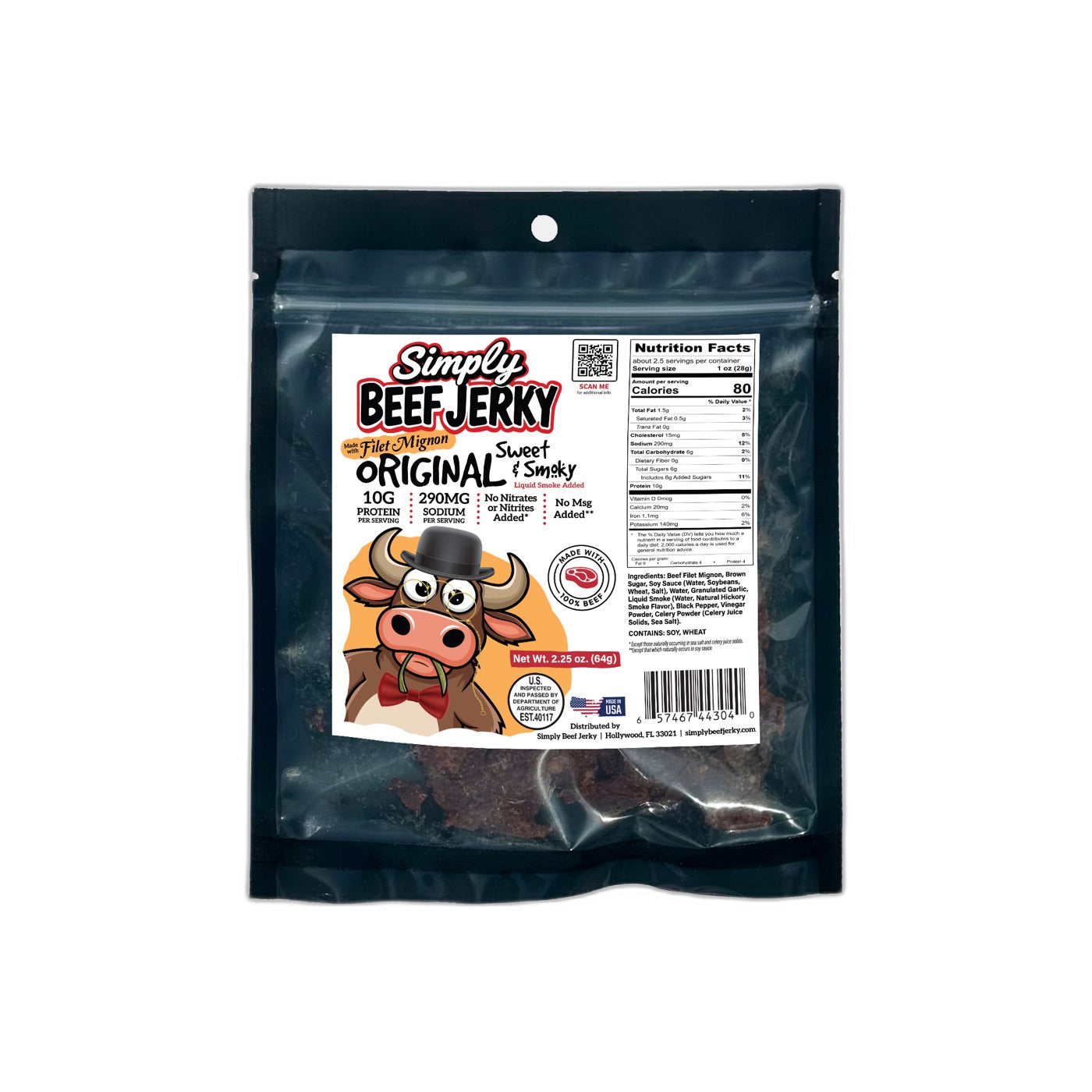
Warning signs in the first ingredient slot: "beef product," "mechanically separated beef," "coarse ground beef," or any variation that indicates the beef has been processed before it became jerky. These indicate chopped-and-formed production where ground or lower-grade beef is reformed into jerky shape. Simply Beef Jerky lists "beef" first on every bag, in every flavor, because we use whole muscle beef.
2. Check for Nitrates and Nitrites
Scan the ingredient list for "sodium nitrate," "sodium nitrite," or "potassium nitrate." These are artificial curing agents added to some jerky as preservatives. They are also used in processed deli meats and have been associated with health concerns in high quantities.
Some brands use a workaround: they add celery juice or celery powder, which contains naturally occurring nitrates, and then label the product "no nitrates added." This technically complies with labeling regulations but still delivers nitrates via the celery-derived ingredient.
Simply Beef Jerky contains no added nitrates and no nitrites of any kind, including no celery-derived workarounds. The bag says "no nitrates added" and means it. For more on this, see our dedicated no nitrates added article.
3. Protein Per Serving
Find the protein line on the nutrition facts panel. For quality whole muscle beef jerky, you should expect 8 to 10 grams of protein per 1 oz serving. Anything consistently below 6 grams per ounce warrants scrutiny. It suggests either a lot of marinade, filler ingredients diluting the beef content, or both.
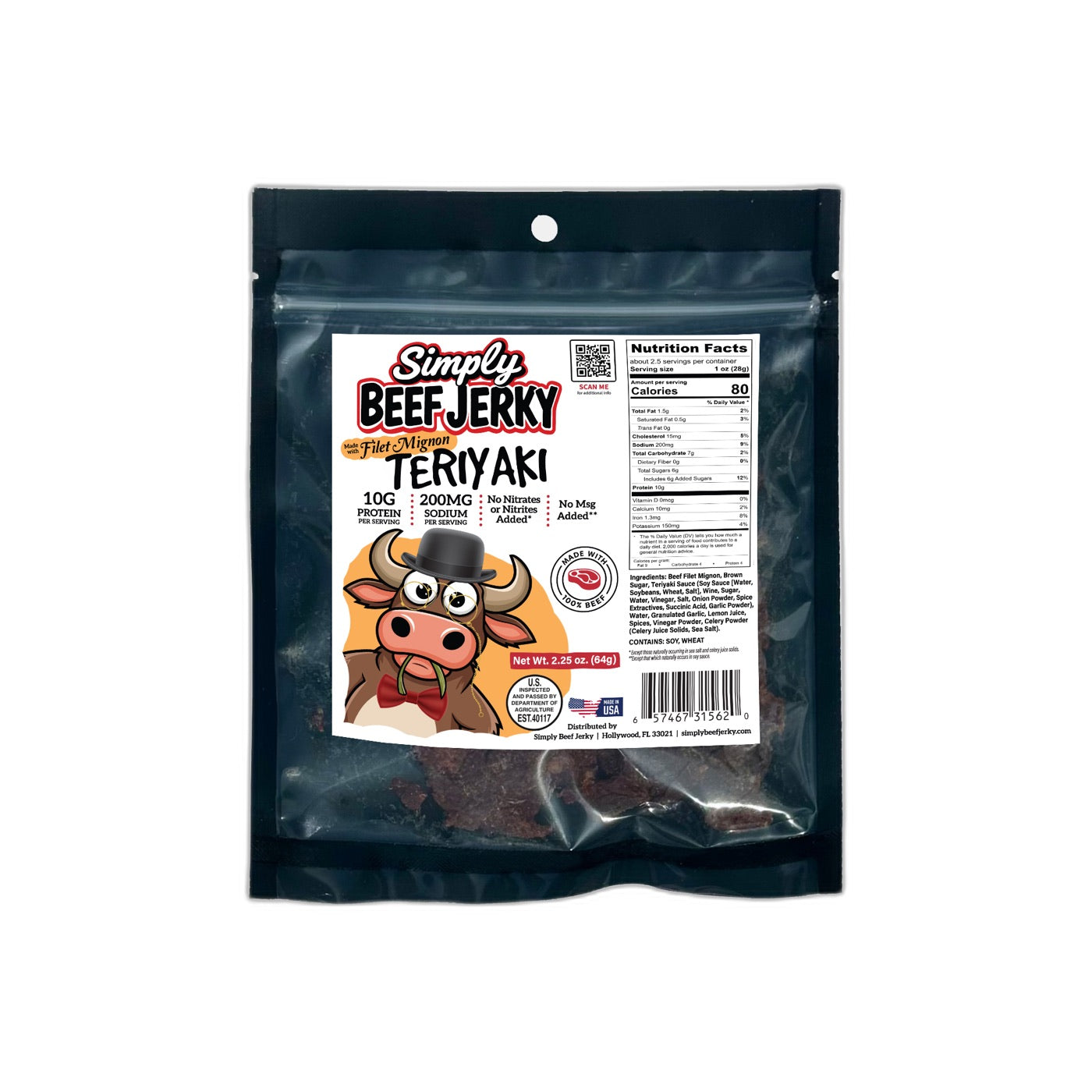
Simply Beef Jerky delivers 8 to 10 grams per serving across all nine flavors, with Classic Original and Teriyaki at the top at 10 grams per ounce.
4. Sodium Per Serving
Beef jerky contains sodium as a natural part of the preservation and flavoring process. The normal and expected range for quality jerky is 350 to 600 mg per 1 oz serving. Anything consistently above 700 mg per ounce suggests the product is relying heavily on salt for flavor, which is often a sign that the underlying beef quality needs covering up.
For context on how jerky sodium compares to other common foods, see our beef jerky sodium guide.
5. Added Sugars
The current USDA nutrition label format separates "added sugars" from total sugars. For beef jerky, this is the line that tells you how much sugar was intentionally added through the marinade. A solid target is under 5 grams of added sugars per serving for most flavors. Sweeter flavors like teriyaki and garlic brown sugar naturally run higher, which is expected and appropriate for those flavor profiles.
What to avoid: jerky that uses high-fructose corn syrup, or lists multiple sweeteners early in the ingredient list suggesting sugar is being used to mask flavor deficiencies. All Simply Beef Jerky flavors use straightforward marinade sweeteners in reasonable amounts, with short readable ingredient lists throughout.
6. The USDA Mark
Look for the USDA inspection mark and EST number on the packaging. A USDA inspected product has been produced under continuous federal oversight by an on-site inspector. The EST number is the establishment identifier that links the product to a specific inspected facility.
Products without a USDA mark may have been produced under state inspection programs or cottage food regulations, which carry lower oversight standards. Simply Beef Jerky is produced at USDA EST.40117 in Hollywood, FL. Every bag carries this mark. For the full breakdown of what federal inspection means, see our USDA inspection guide.
Simply Beef Jerky passes all six checks on every bag we make. Whole muscle beef, no artificial nitrates, 8 to 10 grams of protein per ounce, reasonable sodium, clean sugar profile, and USDA EST.40117. Flip the bag over and see for yourself.